Introduction
In my 2023 calendar, I adopted designs from the Dutch artist Theodore van Hoytema (1863-1917). I first discovered him while browsing the website of the Rijksmuseum. Van Hoytema’s calendar designs are neat and elegant, with harmonious color schemes. His illustrations themed around plants and birds are delicate, gentle, and whimsically childlike, instantly capturing my heart. Later, I found a paper about him in the Netherlands Yearbook for History of Art (Nederlands Kunsthistorisch Jaarboek) which helped me gain more insight into his poster designs. I also stumbled upon a monograph about him at the Hague Library while taking a break from the cold. This monograph is part of the 20th Century Artists series by the Drents Museum, which broadened my understanding of his life. I am astonished by the mental strength he must have relied on to produce more beautiful works every year for a total of seventeen years, all while struggling with illness, until his life came to an end.
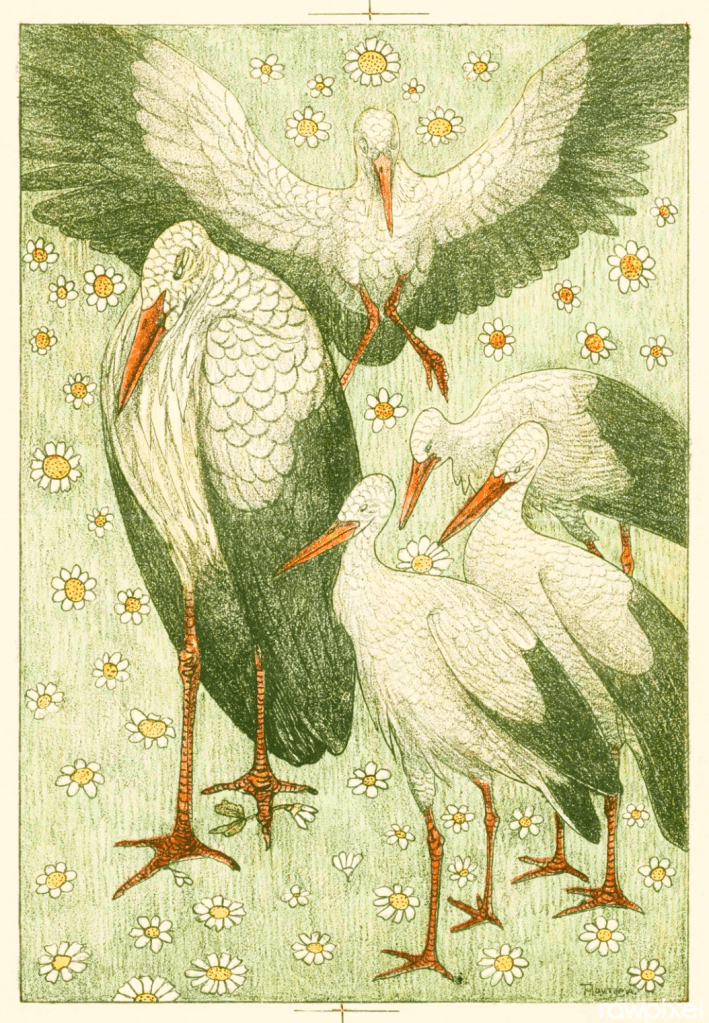
Five Storks in a Meadow
Vijf ooievaars in een wei
Artistic Style
Theodore van Hoytema’s artistic style is difficult to categorize due to his multifaceted career as a graphic designer, illustrator, draftsman, and printmaker. Throughout his lifetime, he produced a wide variety of works, including prints, posters, calendars, bookplates, illustrated books, as well as designs for menus, greeting cards, murals, screens, vases, tiles, and even decorative paintings for salad oil shipping crates and ship decks. Appreciated by the Netherlands’ most important art critics in his youth, he gained numerous exhibition and auction opportunities through the Pulchri Studio art society and The Hague Art Circle. His later life was plagued by syphilis, but he continued to create art despite his illness, passing away at 53 and buried in The Hague’s Oud Eik en Duinen Cemetery.
Van Hoytema lived during “Die Nieuwe Kunst,” the second Golden Age of Dutch painting, architecture, and scientific research. This era, marked by a strong interest in the study and representation of the natural world, especially in print design and printing, is also known as a renaissance period for natural studies. Growing up with the New Art Movement, van Hoytema combined an artist’s sensitivity to beauty with a designer’s pursuit of order. His works feature harmonious colors, simple patterns, elegant compositions, lively fonts, and engaging layouts, infusing even his applied arts with clever concepts as if they possessed their own life and breath.
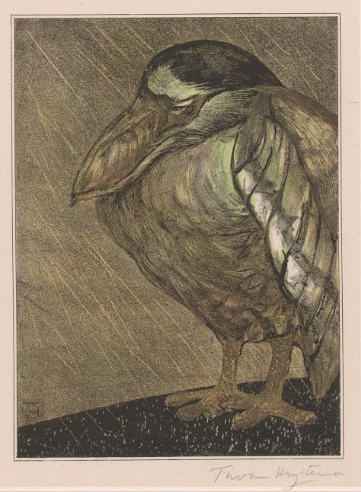
Schuitbekreiger in de regen
Van Hoytema chose nature as his sole mentor, keenly depicting flora, fauna, and insects with vibrant and fluid details. The ecological settings and seasonal characteristics of his subjects were ingeniously integrated into his compositions. His sketches, watercolors, and prints reveal his rich experience in observing and representing nature, as well as his appreciation, empathy, and attachment to it.
Birds were his favorite subjects within the vast natural world, with crows often used to represent himself. Visual images of herons, owls, ibises, geese, peacocks, and other birds permeate his life’s work, showcasing his enduring fascination and love for the avian world.
From an early stage, his works displayed a remarkable quality as if imbued with a warm, natural aura. Biographers who have had conversations with him noted that Theodore van Hoytema possessed a keen insight into the natural world. He could convey the emotions of nature in his works because he lived in harmony with it, achieving a unity of man and nature.
Throughout his nearly forty-year career, in addition to the Dutch tradition of flora and fauna illustration, van Hoytema also embraced influences from the East—particularly Japanese prints. The themes of seasons and meteorological transitions in Ukiyo-e, along with the delicate capture of fleeting changes in the natural world, resonated with the artist’s sensitive style. The vertical format of scroll paintings and the combination of images with text also inspired van Hoytema to innovate beyond the traditional dimensions of Western oil paintings.
Lithography was van Hoytema’s favorite artistic form. His repeated interaction with various mediums and lithographic stones might have been another way for him to commune with natural elements, elevating Dutch lithographic art to unprecedented heights. G. Knuttel, in his monograph written for van Hoytema in 1953, stated that his mastery of color and technique surpassed almost everyone else, praising him as “one of the greatest printmakers to date.”
Van Hoytema’s works are now primarily housed in the Rijksmuseum’s national print collection and the Municipal Museum of The Hague. The former’s collection mainly comes from donations by friends of the artist, while the latter acquired a large number of works after the artist’s death.
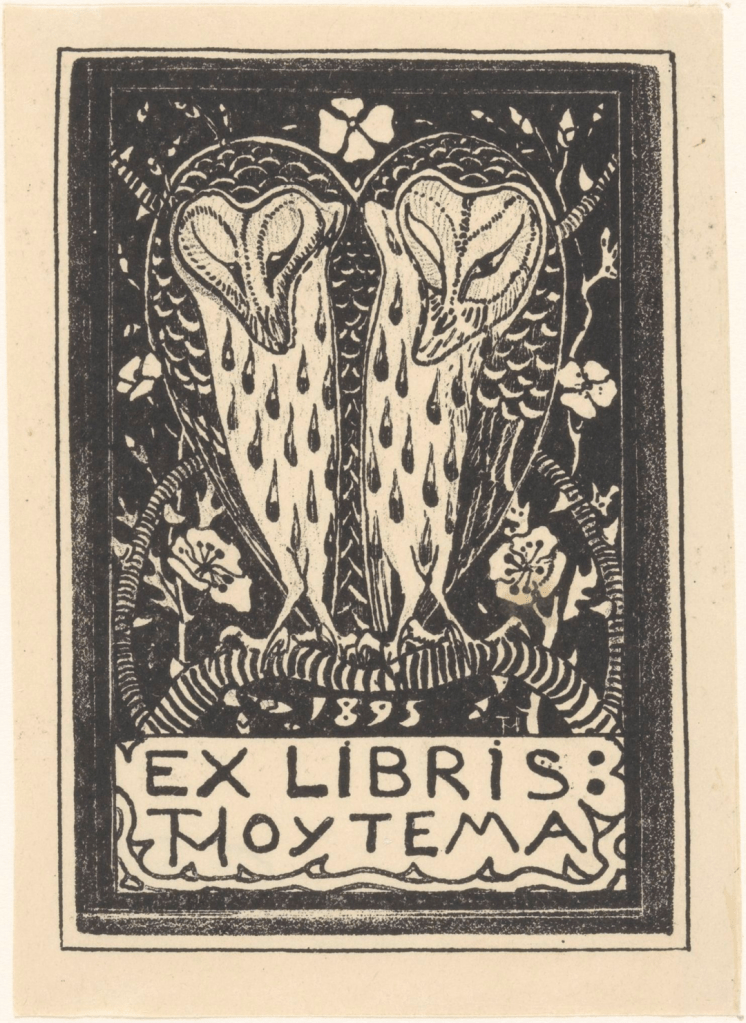
Zoological Museum and Lithography
Theodore van Hoytema was born into a banking family and lost his parents in childhood. After engaging in basic studies in Leiden, he found work in the banking industry with his two brothers in Delft. However, he soon resigned to devote more energy to painting and began studying at the Hague Art Academy.
The following year, he moved from Delft to Leiden, seeking the support of one of the most important figures in his artistic career—his uncle Adriaan Pieter Marie van Oordt (1840-1903). By then, van Oordt was a significant figure in the European publishing industry, having taken over the Brill publishing house from Evert Jan Brill. Brill, now one of the most important academic publishers, was already renowned in Europe at that time, bringing van Oordt considerable prestige. In 1883, he was awarded the Order of the Crown of Italy, and six years later, the Ottoman Sultan awarded him the Order of the Medjidie, and in the same year, the Swedish king awarded him the Order of Vasa.
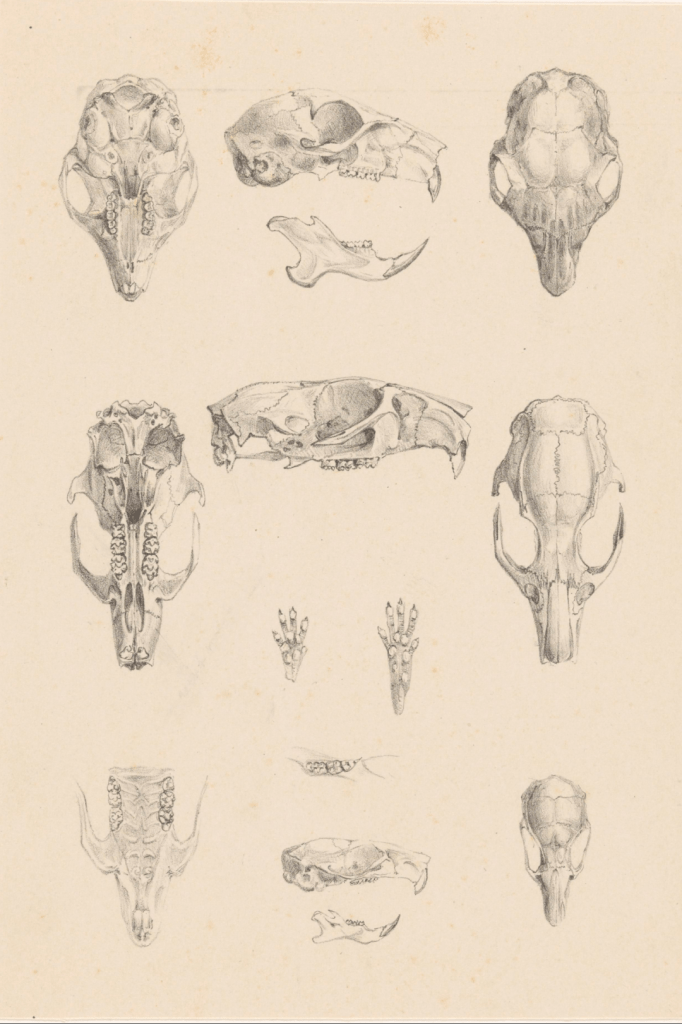
With his uncle’s help, van Hoytema’s life began to take a positive turn. Van Oordt not only introduced him to publishing orders but also helped him secure a position as a draftsman at the Zoological Museum.
Working as a draftsman for scientific publications and museums, Hoytema had access to rich resources and creative opportunities, allowing him to study the muscle and skeletal structures and skin details of various animals in depth. In 1890, the first book featuring his illustrations was published. In the zoological studies of the Dutch East Indies by Max Weber, a professor of zoology at the University of Amsterdam, van Hoytema’s name appeared at the bottom right of every page of illustrations. The knowledge he accumulated during this period enabled him in his later works not only to accurately portray the physical characteristics of animals but also to depict them within their entire ecological environment and seasonal elements.
The pivotal role in the formation of Theodore van Hoytema’s artistic style was also his initial experience with lithography, as the task of creating illustrations for biological publications was performed on lithographic stones. Lithography, also known as planographic printing or litho printing, is a form of printmaking that originated in Germany at the end of the 18th century and became widely popular in the 19th century. Although it has declined with the development of modern printing technologies, lithography holds an important place in art history.
One of the directors of The Hague Zoological Museum, ornithologist Hermann Schlegel (1804-1884), was a strong advocate for lithographic printing, viewing it as a beneficial invention for disseminating scientific knowledge. He also established guidelines for the creation of realistic drawings, which influenced bird illustrator J.G. Keulemans (1842-1912). It is likely that van Hoytema was familiar with Schlegel’s work “Fauna of the Netherlands” and that he initially learned from studying Keulemans’ lithographic works when he started as a draftsman.
To create a lithograph, an artist first draws with an oily medium on a smooth limestone slab. After the image is fixed with a mixture of acid and gum arabic, the stone is moistened uniformly, then ink is applied. Due to the basic principle that oil and water do not mix, the ink adheres only to the areas drawn with the oily medium, resulting in delicate and rich color effects. During his time as a draftsman, the lithographic stone was merely a tool for van Hoytema to replicate images. However, as his skills progressively advanced, he reached an exceptional level of craftsmanship, enabling him to freely express his art through a variety of techniques.
Van Hoytema’s advancement in lithography allowed him to experiment with and perfect his methods, leading to a unique style characterized by its sensitivity to natural themes and meticulous attention to detail. His mastery over lithographic techniques enriched his portrayal of the natural world, making his prints celebrated examples of how art can illuminate scientific understanding. Through lithography, van Hoytema not only contributed to the tradition of biological illustration but also elevated the medium as a form of artistic expression, blending scientific precision with aesthetic elegance.
The Gardener’s Cottage and Illustration
After leaving the Zoological Museum, Theodore van Hoytema embarked on a path of artistic design due to his rich imagination and innate closeness to nature. To him, natural fairy tales were inseparable from everyday life, prompting him to move to a gardener’s cottage on the outskirts of The Hague, which he shared with the painter Louis Lacomblé (1862-1928). There, he lived with a cat, a dog, a flock of chickens and ducks, and a garden filled with apple and pear trees and blooming flowers. His subjects of study shifted from museum specimens to living plants and animals.
During his honeymoon, he began working on his first picture book, “Hoe de vogels aan een koning kwamen” (How the Birds Got Their King). This book consists of 31 lithographs and was published in two editions: a trial edition by the artist himself and a commercial edition. The trial edition, housed in the Municipal Museum of The Hague, features a title page that reads “colored by hand by Th. Van Hoytema,” with the dedication “To my beloved wife, December 24, 1892.”
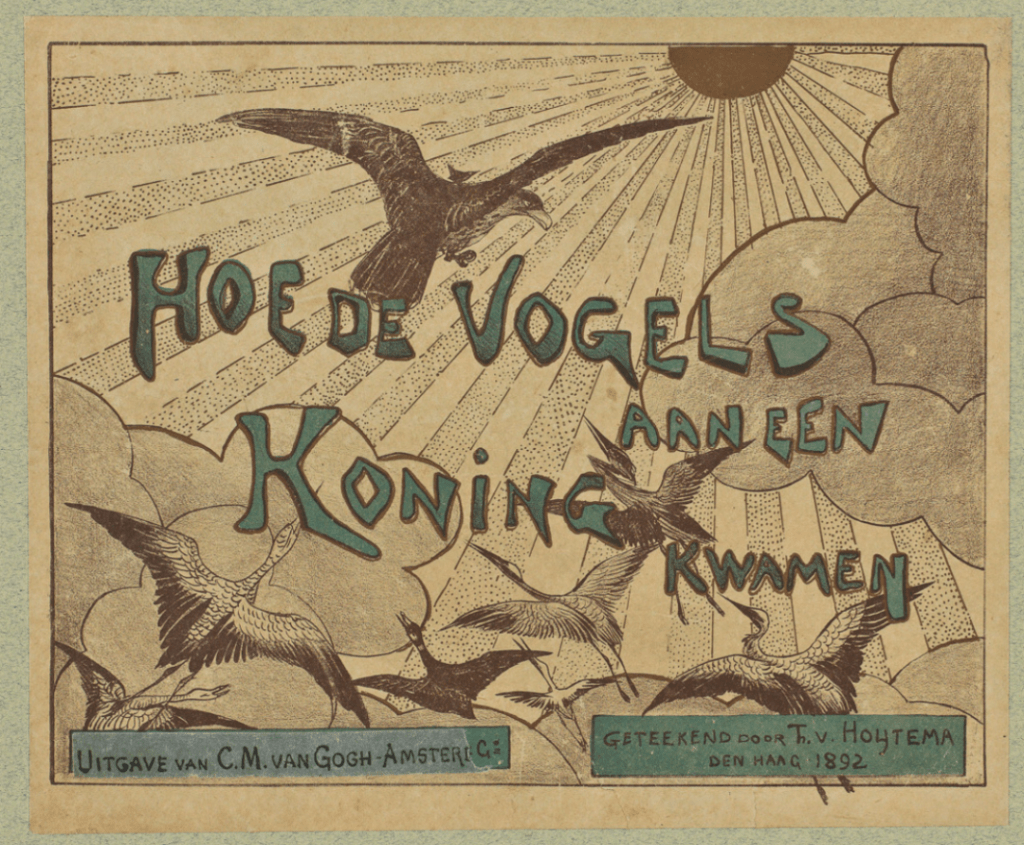
Hoe de vogels aan een koning kwamen
The picture book tells an ancient fairy tale. The birds wanted to select their king through a competition of flying height and burrowing depth. The wren hid inside the eagle’s wings and in mouse holes, attempting to cheat, but ended up being despised by the flock. The owl, having failed its duty to guard the wren at night, was so ashamed that it dared not show itself in front of the birds during the day, henceforth appearing only at night. The fleeing wren proudly proclaimed itself as the king, thus acquiring the nickname “winter-king” (winter-koning).
Theodore van Hoytema incorporated many ingeniously conceived details into the picture book. A crane stands at the bottom left corner of the title page, bowing in welcome to the reader. The text unfolds the story along the branches and leaves of plants, with neat handwritten fonts spelling out rows of capital letters, meticulously playful and cute, with sparrows flitting between the words.
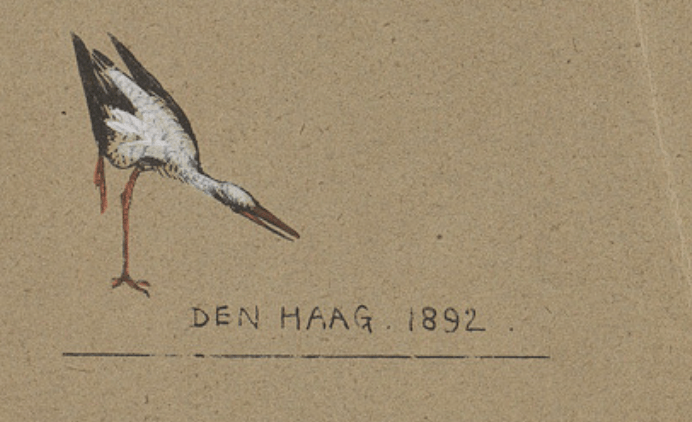
The picture book features extensive use of blank space, with the gray background serving variously as water’s edge, sky, day, and night. This approach may stem from van Hoytema’s previous tasks of drawing on blank paper pages at the museum, especially evident in the last page’s bird group portrait, which includes Dutch annotations of bird names, resembling illustrations in a scientific publication. The knowledge he accumulated during his time in Leiden proved useful in depicting the forms and habits of birds. The limited color palette and contrast in the book reflect his early interest in lines and graphic elements.
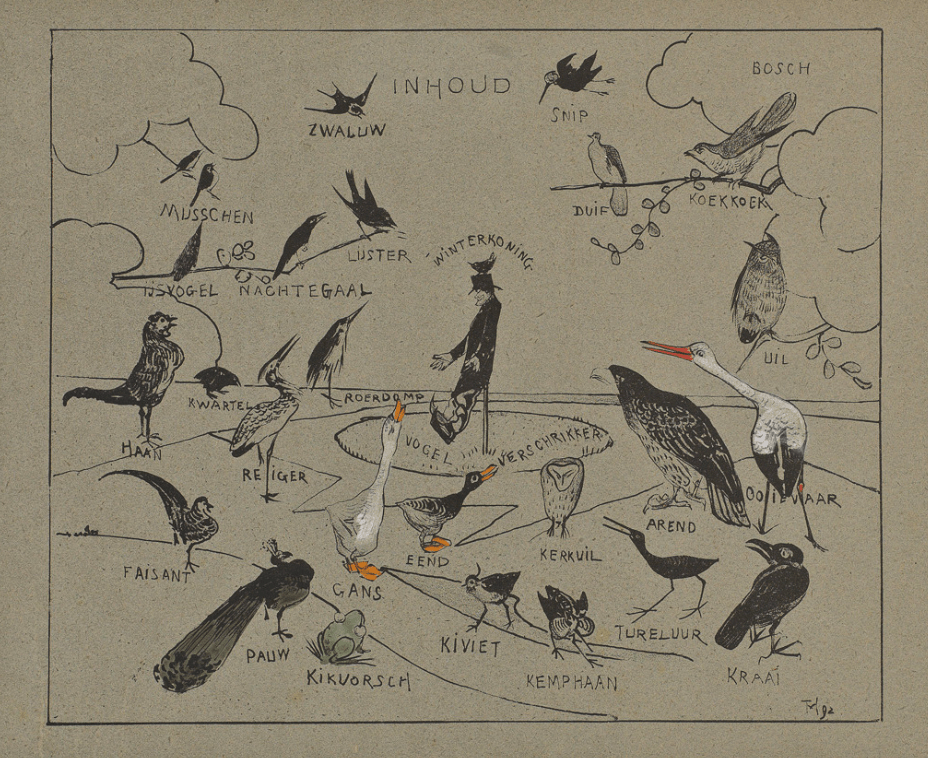
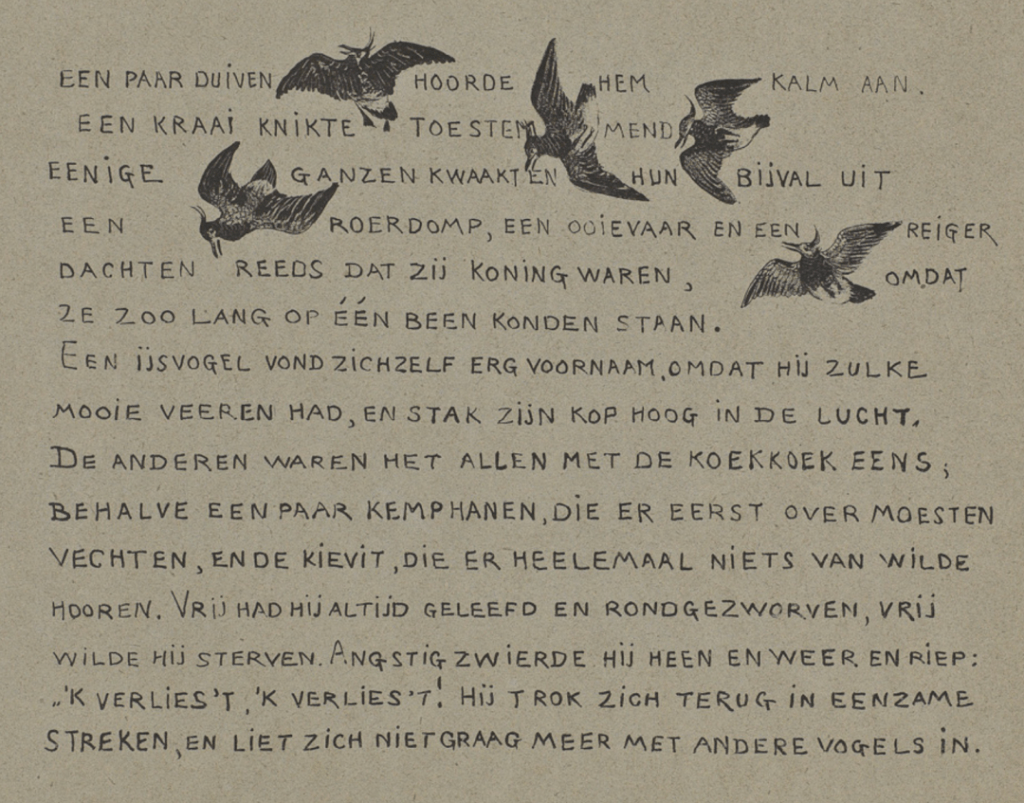
This picture book combines his experiences in both art and zoology, merging aesthetic and scientific knowledge. The images of peacocks, owls, herons, and other birds that appear in the book would later reappear in the artist’s future works in similar yet more splendid forms.
From drafting sketches to completing the final version, the creation of this picture book took about a year. Neighbor and painter Louis Lacomblé recalled van Hoytema’s process: “At that time, he was busy with his first picture book. From a decorative perspective, it was far from the refinement of his later work like ‘The Ugly Duckling,’ somewhat immature and naive, but brimming with playful ideas. He was very happy while working on this book. At night, as I was in the room upstairs, I could hear him laughing, enjoying the pleasure of painting. Whenever I recall that period, I immediately see van Hoytema’s sparkling, wise brown eyes, hear his boyish laughter and voice, as he sang African American songs from England with his guitar in the evenings—songs that were memories from his adventurous journey to London.”
Afterward, Theodore van Hoytema published four more picture books: “The Ugly Duckling” in 1893, “The Owl’s Happiness” in 1895, “The Two Roosters” in 1898, and “The Joy of Birds” in 1904. All were based on Hans Christian Andersen’s fairy tales or tales written by van Hoytema himself. These works brought him some fame, but they never achieved widespread popularity. The high cost of printmaking led to limited editions of these picture books and made them too expensive as children’s books. In 1893, purchasing a copy of “The Ugly Duckling” would cost 10 Dutch guilders, a considerable amount at the time.
However, his meticulously illustrated books have not been forgotten by history. After his death, critics emphasized that these works brought “eternal beauty” to the world.
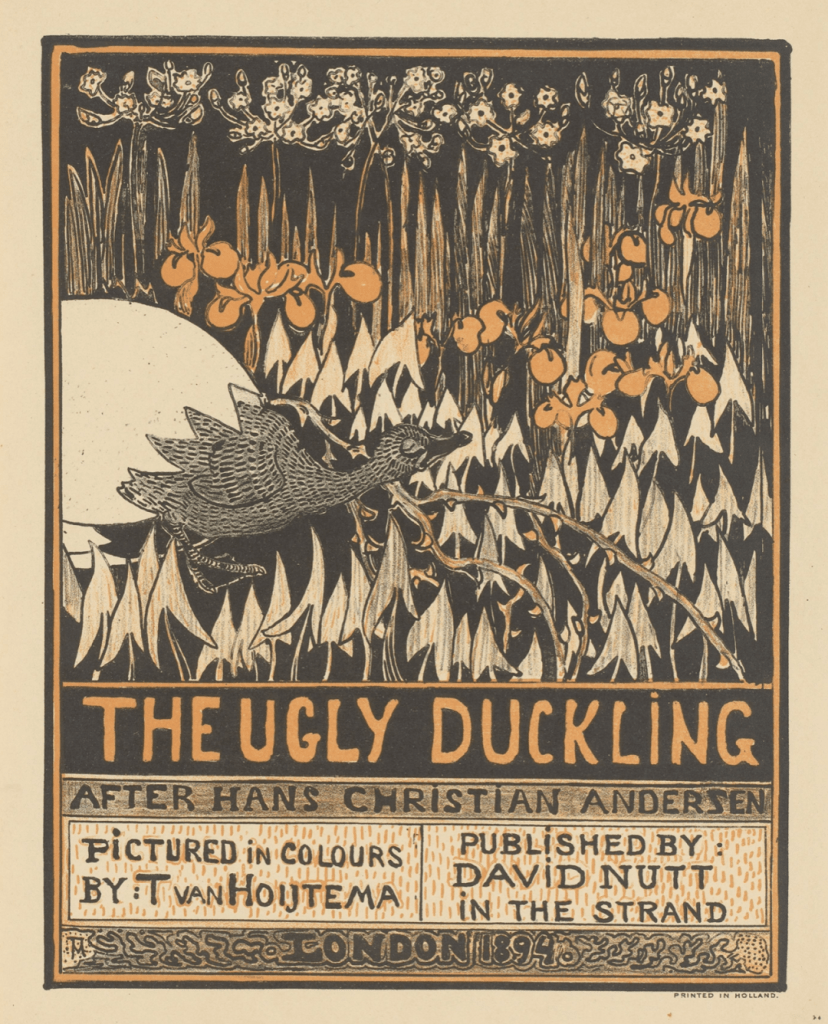
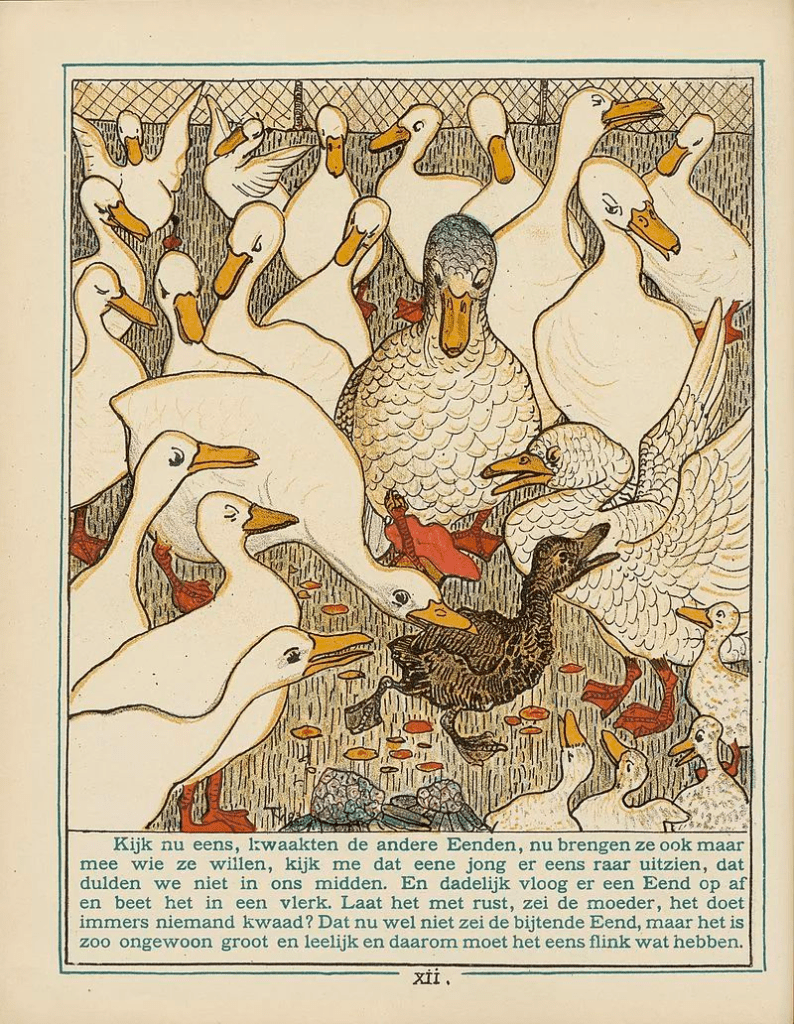
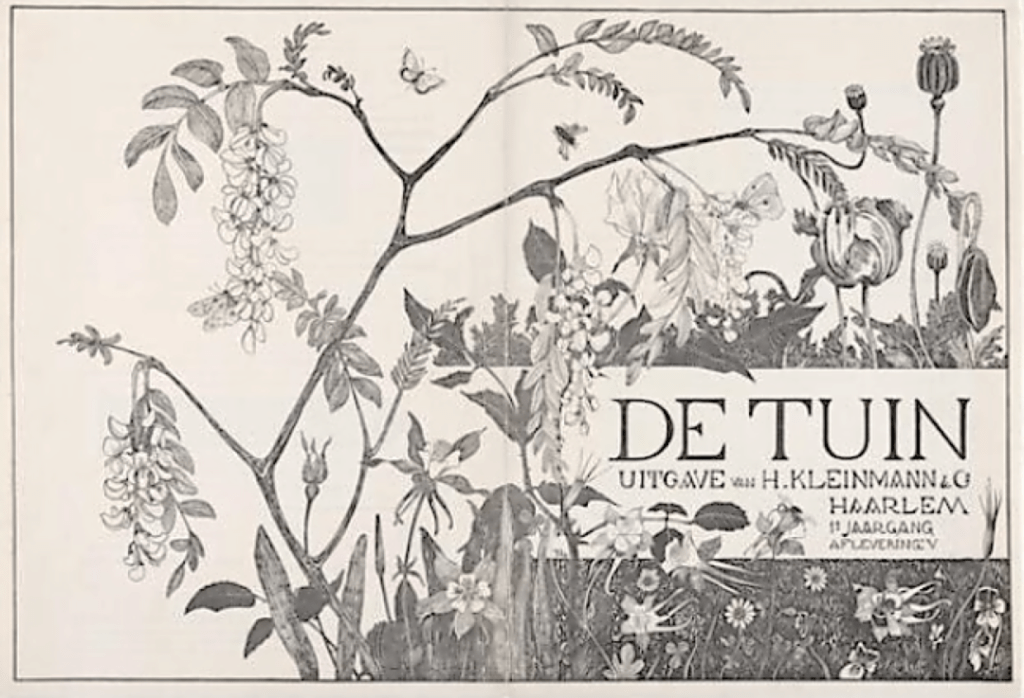
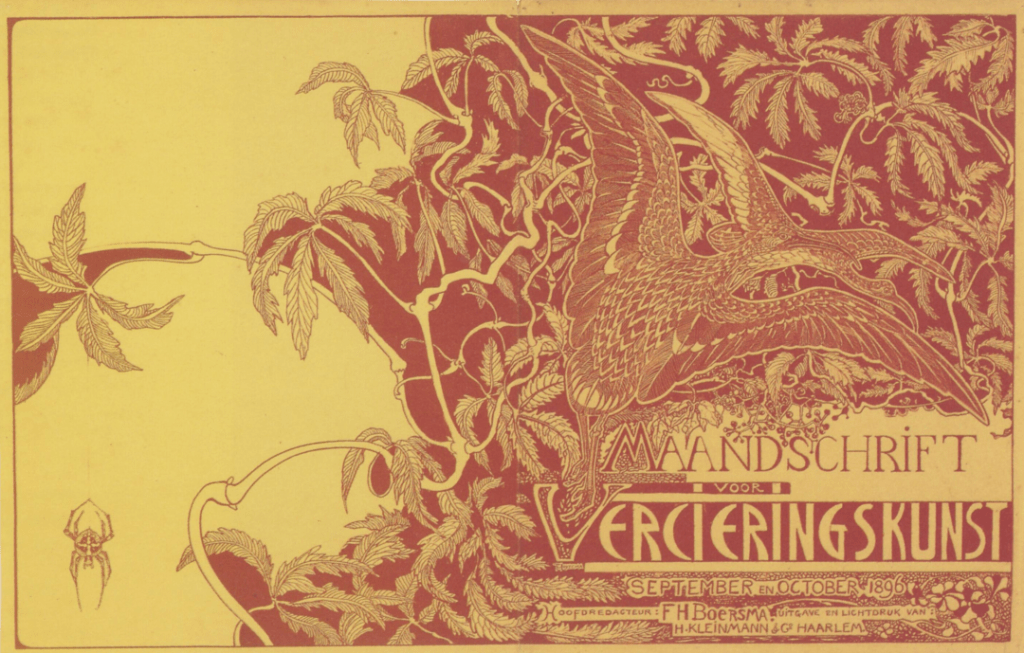
During this time, his skill in lithography continued to improve. In the following years, he also produced beautiful bookplates, invitations for art exhibitions, and designed covers for albums and magazines, including “The Magazine of Decorative Arts.” His cover design for the May issue of the garden magazine published by H. Kleinmann & Co. of Haarlem in 1899 was particularly exquisite, featuring a mysterious and intricate, yet clear and tangible natural world surrounded by vine-entwined typography.
Artis and the Bird Studies
In 1897, Theodore van Hoytema moved close to the Amsterdam Zoo, Artis, where he frequently practiced sketching, integrating the bird forms he observed into his lithographic creations, culminating in the renowned “Studies of Birds.” Around the turn of the century, in 1900, the artist’s skill in printmaking and his passion for creation reached their zenith, with the series “Studies of Animals” and “Studies of Flowers” being released subsequently. Van Hoytema also held several solo print exhibitions and auction events during this period.
His proximity to Artis Zoo provided him with a rich source of inspiration and subjects for his artwork. The zoo’s diverse avian population allowed van Hoytema to study various bird species up close, capturing their forms, behaviors, and characteristics with a naturalist’s eye and an artist’s hand. This experience not only enhanced the accuracy and vitality of his lithographs but also underscored his deep appreciation for nature, which was a constant theme throughout his career.
“Animal Studies” represents the pinnacle of Theodore van Hoytema’s work in lithography, comprising six prints: “Ibis and Rail,” “Angora Rabbit,” “Stoat and Kestrel,” “Monkeys,” “Silver Heron,” and “Iguana.” At this stage in his career, he had begun to employ innovative techniques, such as using relief printing to capture the fine fur of animals or carefully scratching away ink from the lithographic stone to achieve richly layered color effects.
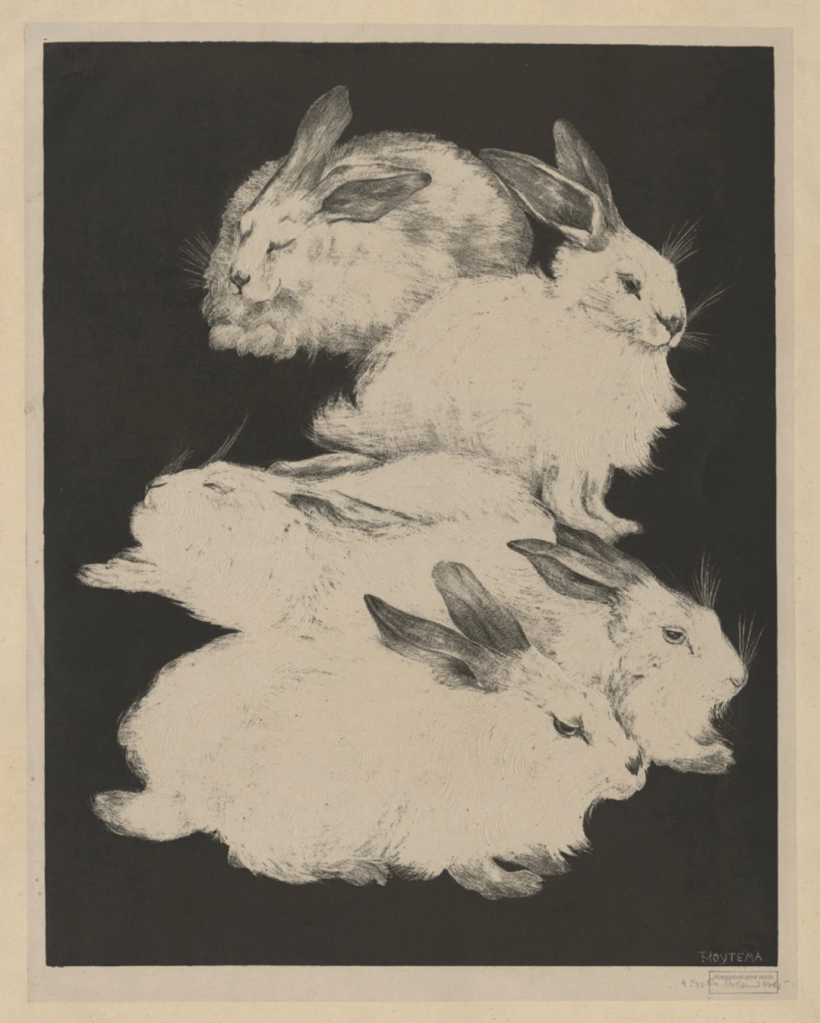
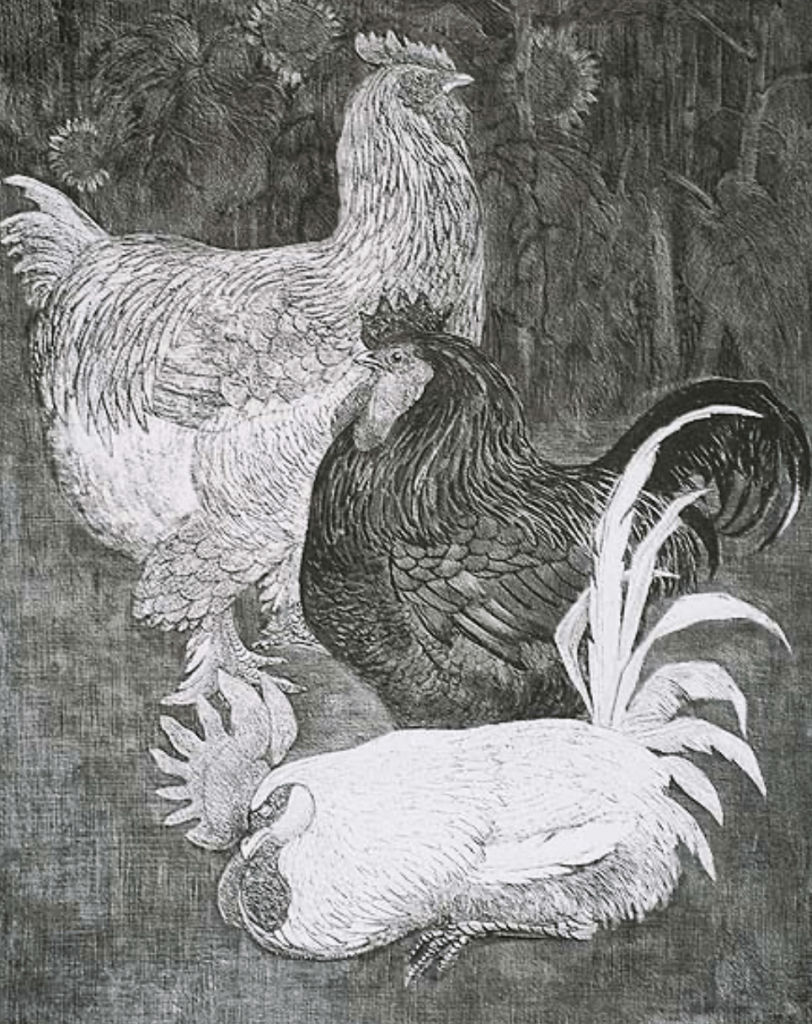
During the production of “The Three Cocks” at the same time, he also created uneven marks on the lithographic stone to depict the texture of feathers. In these works, the influence of Eastern art trends is evident.
In the second half of the 19th century, Europe already had a large number of Japanese print works. Almost all printmakers were influenced by Japonism to some extent. The available references to Japonism were rich and varied, with each individual absorbing different styles. Theodore van Hoytema likely viewed Japanese crafts, including woodblock prints and printed materials, at the National Museum of Ethnology in the Netherlands. The strong contrasts of light and dark he employed in his prints and poster designs, the clear image cropping, and the calligraphic lines woven from reeds, aquatic plants, and vines, were all influenced by the Japanese style.
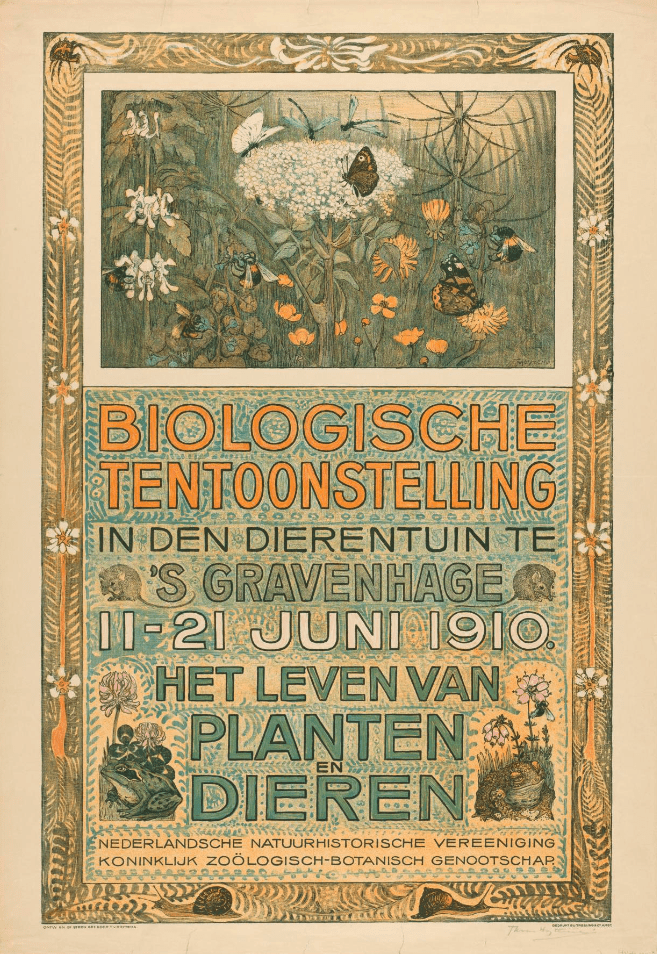
In 1910, he created a beautiful poster for the summer exhibition “The Life of Plants and Animals” at The Hague Zoo. An interesting viewpoint on this poster is mentioned in an article in the Dutch Art History Yearbook titled “The Perspective of Insects”: it depicts a rich natural world, which itself is an ecosystem, for example, the pattern elements at the edge of the image are also part of the image’s ecosystem.
Like all his other works, this poster is a masterpiece born from his long and meticulous observation of the natural world, while at the same time, Theodore van Hoytema invites viewers to engage in a prolonged and detailed appreciation of his work. This beautiful creation not only conveys fleeting impressions of light and shadow glimpsed in nature but, upon closer inspection, reveals the intricate interdependencies among living beings.
This poster is one of three he created in his lifetime that was widely acclaimed. Dutch art historian Willem Frederik Gouwe (1873-1951) commented that his poster works are of the kind that deserve to be permanently cherished in homes. Their gentle and peaceful themes, beautiful imagery, and superior artistic skill provoke contemplation and deep reflection.
Calendars and Disease
In 1901, the artist’s ten-year marriage unfortunately ended. Around 1903, his health began to decline.
An artist who had worked with Theodore van Hoytema on a strike movement in Amsterdam recalled that he stood on a small ladder to paint a spirited rooster — which had always been at the forefront of the parade — and then walked down the ladder quietly and slowly due to pain, his face twisted in agony, almost immobilized by the pain, and had to find a bench to rest on near the park. His friend remembered the situation, saying, “He was very weak, very weak… Later, we saw him again, walking with difficulty with a cane, his steps stiff, his face contorted… When he rested in the park, sitting on those benches, it seemed he struggled every time to stand up.”
Another close friend recalled his struggle to create the calendar for 1904, as his illness made it impossible for him to rest for several days. When the pain finally eased a bit, “life and living were still everything to him,” but this period was almost fleeting, and he quickly fell back into suffering from his illness.
His poor health did not prevent the creation of beautiful art. The pain and melancholy he experienced are reflected in his wonderfully fairy-tale-like works, especially in “The Dead Bird under the Hazelnut and Honeysuckle.” The inspiration for this piece came from a bouquet of flowers given by a visiting friend and a pitiful little bird he saw outside the hospital window.
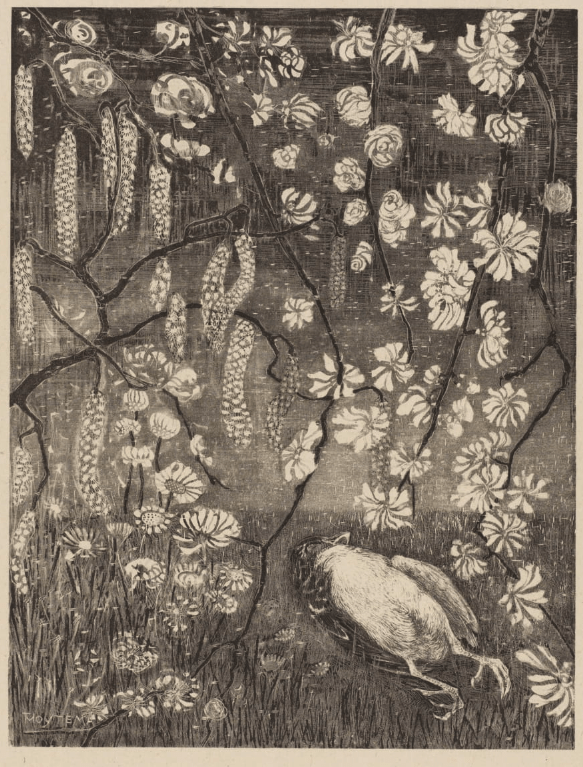
The Dead Bird under the Hazelnut and Honeysuckle
His most renowned and astonishing work was created during this period — a series of 17 calendars, each consisting of 12 pages, totaling 204 lithographs. The first volume was released in 1901, and the last one was published in 1917.
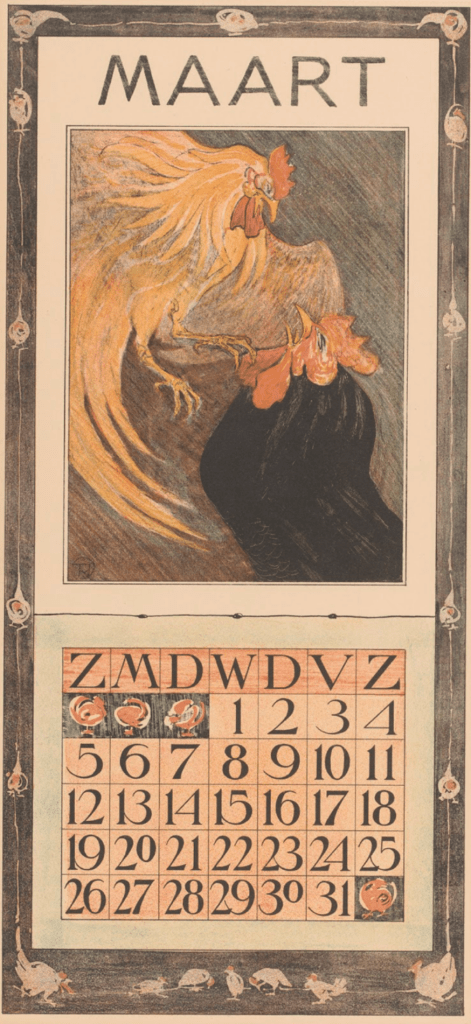
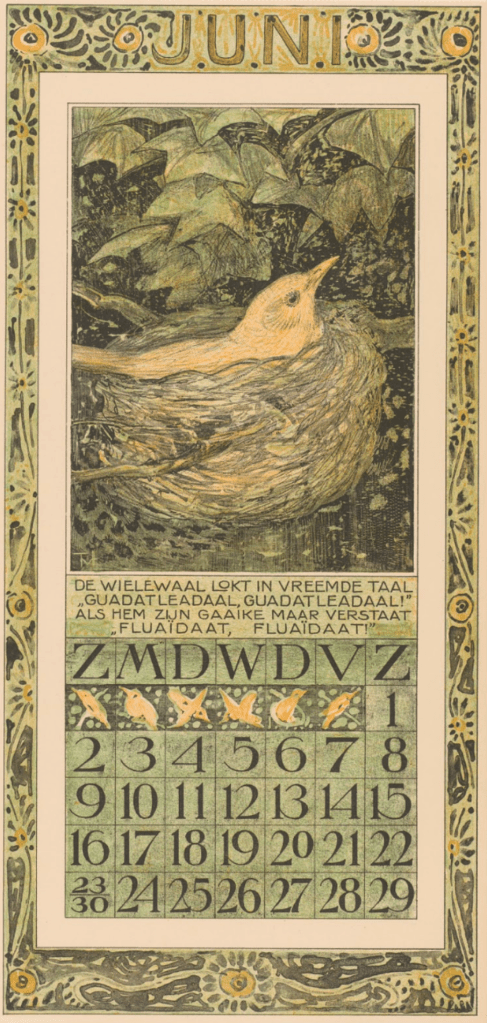
Initially, the calendars were published independently by him. Starting from 1910, the Amsterdam liquor merchant Ferwerda & Tieman took over part of the distribution, offering them as gifts to high-spending customers. However, their use for commercial advertising did not detract from the purity of the calendars as works of art. Theodore van Hoytema’s calendars can still be considered the most perfect calendars of the 20th century.
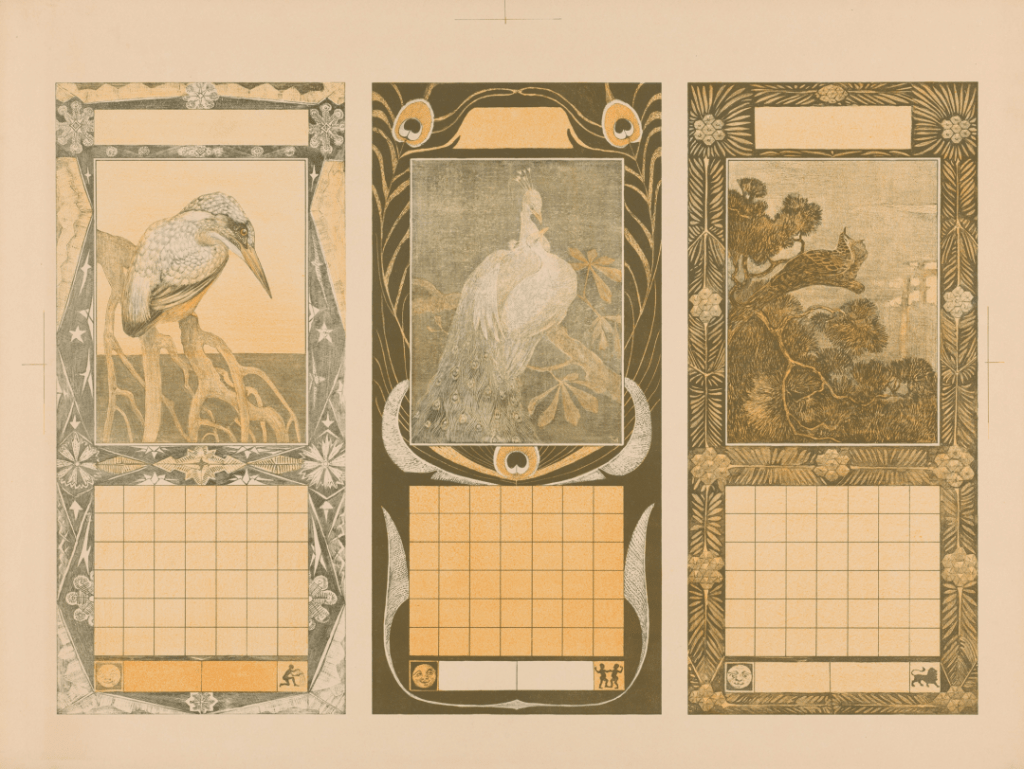
Theodore van Hoytema’s calendar pages maintained a consistent size over the years: 445×207 millimeters. Each monthly calendar page consisted of a title bar, a pattern bar, a calendar filled with grids, and a border.
The name of the month often appeared at the center of the topmost part, with the border filled with patterns matching the theme. He deliberately distanced his work from the stylized patterns of British Arts and Crafts design. Even the recurring patterns, like the branches and leaves of a large tree, had subtle differences in form, varying as if blown by the wind. If compared to another form of art, his pattern design could be said to resemble a musical composition, with symmetry and repetition, as well as variations in dynamics and tempo.
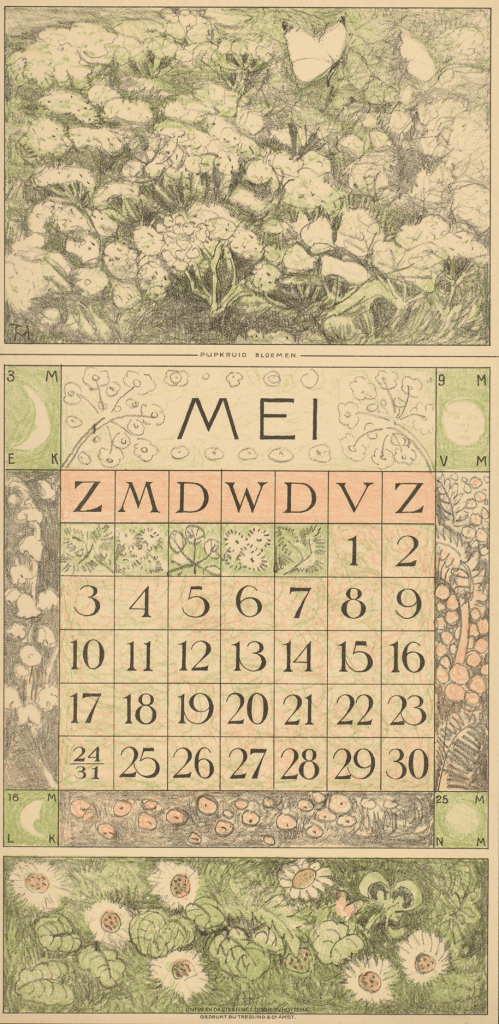
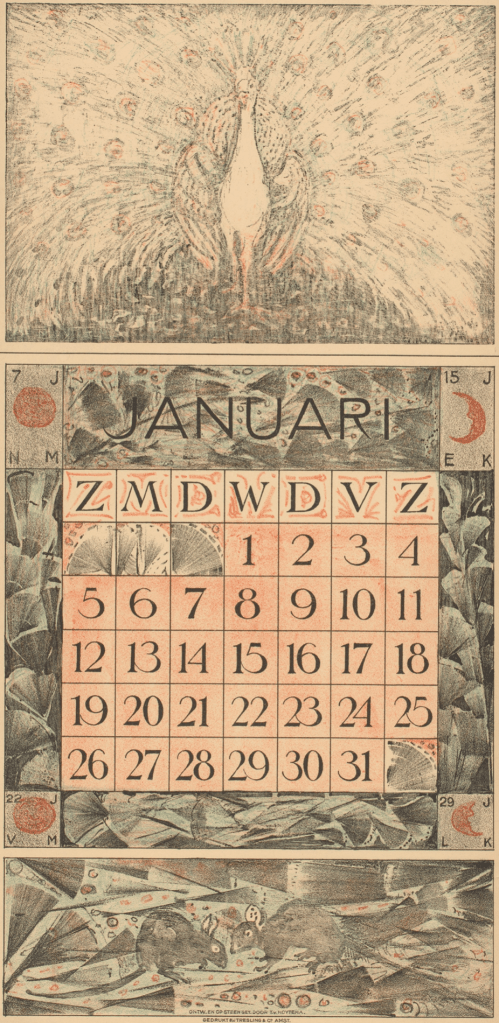
The central pattern bar of the calendars features paintings themed around flora and fauna. Portraits of pigeons, swallows, crows, herons, red-crowned cranes, black-billed gulls, boat-billed herons, and toucans appear, accompanied by natural landscapes appropriate for the calendar month. In addition, small hedgehogs, rabbits, pigs, sheep, elephants, monkeys, mice, lizards, and frogs also make appearances.
The calendars are also filled with many amusing doodles, such as the marking of full moon days and the zodiac signs of the month in the corners. When there are blank spaces in the calendar, he fills them with interesting patterns themed around small animals and plants, such as fledglings, frogs, small flowers, cockscombs, or other patterns that are easy to overlook unless looked at closely. His masterful and imaginative lithography skills ensure that the colors on the calendar are soft and delicate, with subtle variations in tone, bringing together the rich variety of textures and ingeniously detailed concepts in a unified presentation.
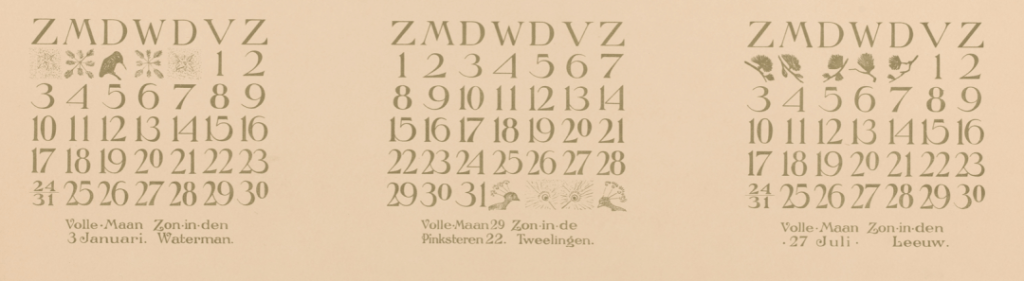
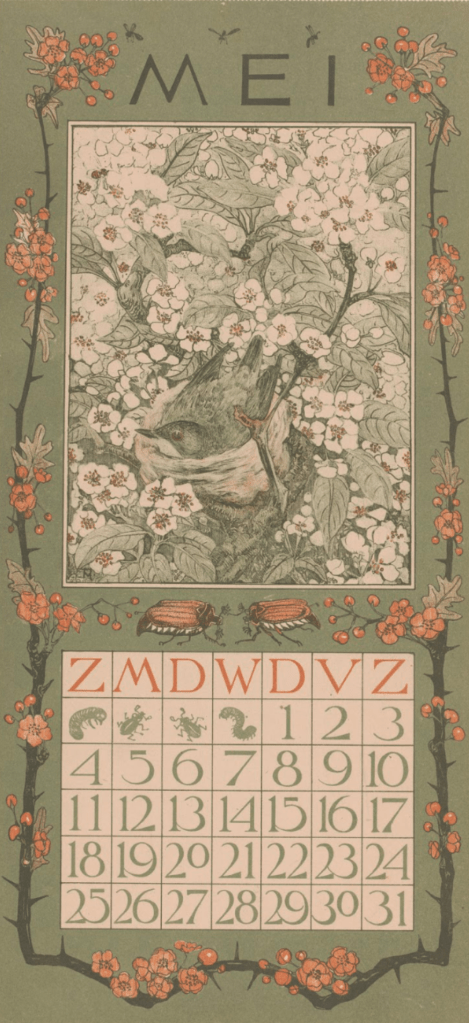
Discussing these calendar works necessitates reiterating the influence of Japanese prints on him. The literal meaning of Ukiyo-e is “pictures of the floating world,” referring to the fleeting and ever-changing nature of the natural world and life itself. In its landscape depictions, it focuses on the constantly changing aspects of flora and fauna with each new season and weather condition. Just as certain natural scenes and seasons are closely intertwined in Japanese print art, in van Hoytema’s calendars, flowers bloom in spring and summer, especially in May with its riot of colors; leaves fall in autumn, migratory birds head south, and in winter, branches are laden with thick snow, with the images and border decorations often using cool tones.
Being a sensitive observer of nature himself, using the months to document the changes occurring in the natural world was perfectly suited to him. His decorated calendars recreate meticulous observations of nature and the feelings of the changing seasons, making them an ideal medium for him.
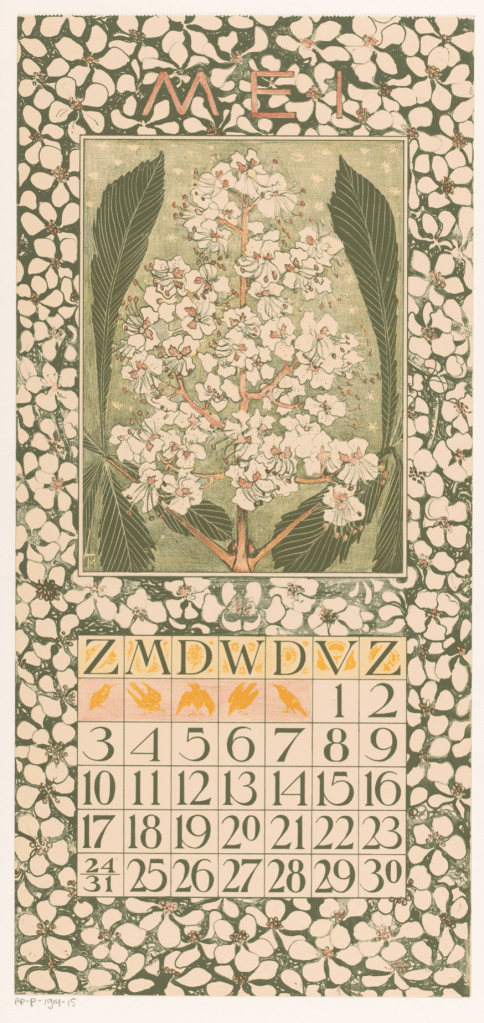

Furthermore, the elegant and serene style of Japanese prints directly influenced the animal images in his work. The rooster in January 1902 and the parrot in August of the same year, as well as the heron in April 1904, exhibit a very distinct Japanese flair. The noble and graceful image of the peacock also repeatedly appears in his calendars, such as in May 1904, August 1910, and January 1913’s white peacock, like celestial beings from the East set against lithographic stones inlaid with peacock feather patterns.

Theodore van Hoytema’s calendars were published each autumn. Following their publication, well-known art critics would discuss the year’s calendar in newspapers and art magazines, sometimes in such detail that each month was discussed individually.
A passage from a monograph provided by the Drents Museum reads: “November’s atmosphere is somber, almost mystical, with a wide, deep blue border at the top, bearing the name of the month, adorned with stars and thorns. The image depicts a boat-billed heron, with thick feathers, staring out of the frame with large, alert eyes, as if gazing into paradise.”
After van Hoytema’s death, Knuttel commented on his last calendar works as “a symbol of a soul struggling with a ‘broken’ body.” Another art critic remarked: “The birds on these prints become tragic beings. Their eyes are wide open. It’s as if the last few pages are all eyes, symbolizing thoughts slowly gazing into the infinity of eternity.”
The world of the late 19th and early 20th centuries, through van Hoytema’s eyes, were waterfowl in flight, golden lotuses, spreading chestnut leaves, drooping feathers of egrets, snow-laden pine trees, and golden reed beds. His natural fairy tales in calendars, picture books, posters, and bookplates interpret the basic laws of the universe’s operation through the beauty of art, embodying the cycle of birth, reproduction, and death amidst the changing seasons and weather.
 Yu Zou
Leave a comment